Your First Home: the 2.5% deposit scheme explained
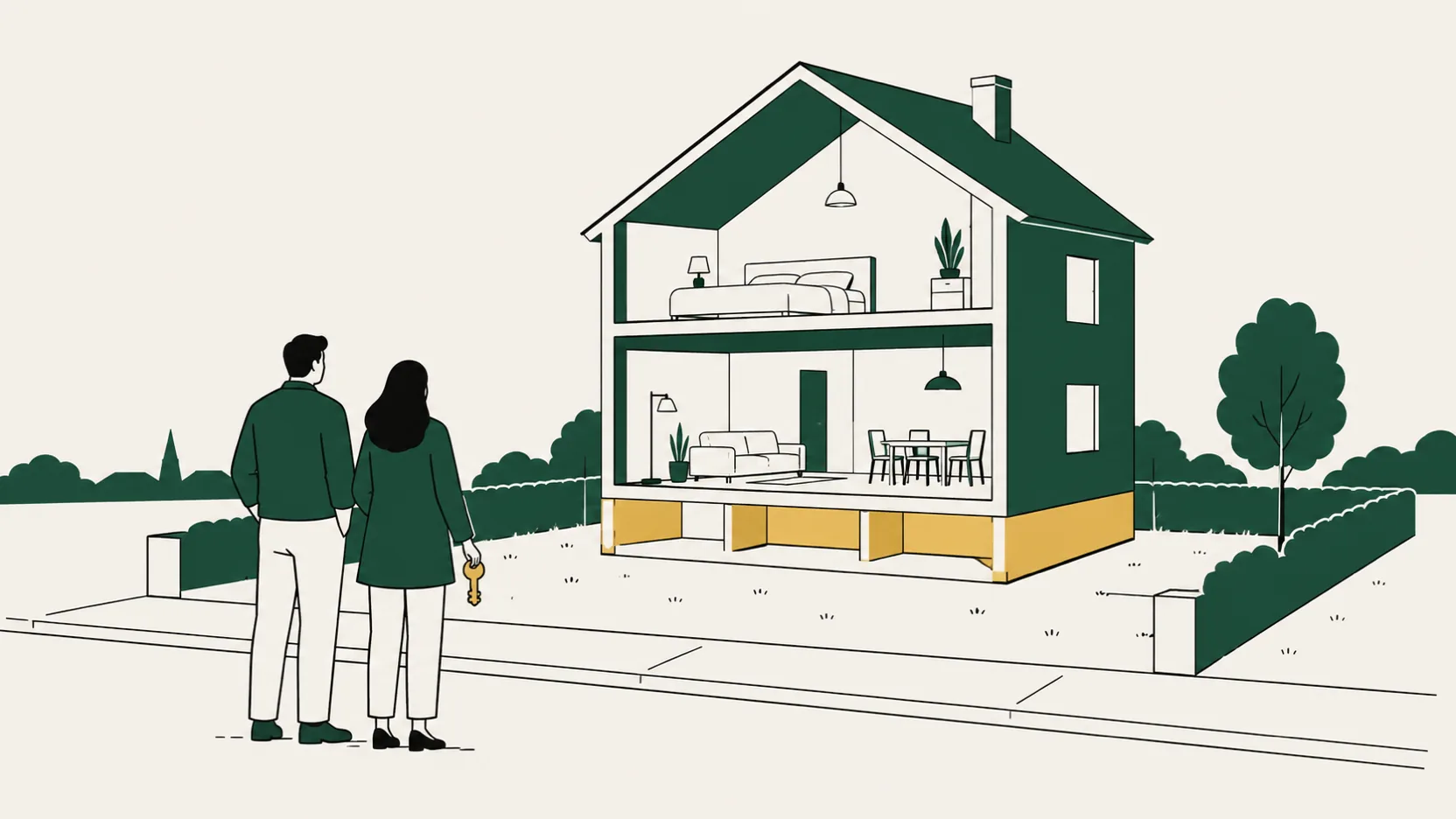
A 2.5% deposit on a £300,000 home is £7,500. That single number is why Your First Home — the new government equity-loan scheme confirmed in the Budget on 28 October 2026 — will get a lot of attention over the next few months. It is a real route to a front door for people without family money behind them. But like Help to Buy before it, it comes with a second loan that grows with your house, and that part deserves as much attention as the deposit. Here is how it works, what is confirmed, what is still awaited, and what it is likely to cost you in pounds.
Information, not advice. We don’t recommend products or providers. Check the official source linked below before you act.
What is Your First Home?
Your First Home is an equity loan scheme for first-time buyers buying a new-build home in England. You put in a deposit of at least 2.5% of the price, the government lends you 20% as an equity loan, and a repayment mortgage from a participating lender covers the rest — 77.5% if you put in the minimum deposit.
It was announced on 26 September 2026 and the detail was published by the Ministry of Housing, Communities and Local Government alongside the Budget on 28 October 2026. The Budget confirms £4.7 billion of funding over five years — £700 million in 2027/28, then £1 billion a year — and says the scheme is intended to help about 70,000 households on to the ladder.
The point of the structure is the monthly payment. Because the mortgage is 77.5% of the price rather than 95%, it is both smaller and (usually) cheaper per pound, since lower loan-to-value mortgages tend to come with lower rates. The government’s own line is that this could save buyers “hundreds of pounds per month” against a 95% mortgage. Whether that holds for you depends on the rates you are offered — which is exactly what the calculator below lets you test.
Who can use it?
As published on 28 October 2026, you will normally need to:
- Be a first-time buyer. The guidance says “normally”, and promises full eligibility rules before applications open.
- Buy a new-build home in England from a developer that has signed up to the scheme. Nothing second-hand, and nothing in Scotland, Wales or Northern Ireland.
- Live in it as your main home.
- Have a total annual household income of £110,000 or less outside London, or £140,000 or less in London.
- Buy under your area’s price cap. Inner London is capped at £650,000 and outer London at £500,000 (using the London Plan 2021 definitions). Everywhere else gets a cap by local authority. Only four examples have been published so far — Reading £375,000, Manchester £355,000, North Devon £320,000 and Middlesbrough £220,000 — with the full list promised “shortly”.
- Get a repayment mortgage from a participating lender, who will run the usual affordability and credit checks. Interest-only is out.
Two things are not yet published: the exact definition of “first-time buyer” the scheme will use, and whether there is a maximum deposit. Help to Buy’s 2021–23 version let you put down more than the minimum, and the Your First Home guidance gives no upper limit, but we’d treat that as awaiting confirmation.
What does it cost month to month?
Take the government’s own example: a £300,000 new-build.
| Your First Home | 95% mortgage | |
|---|---|---|
| Deposit | £7,500 (2.5%) | £15,000 (5%) |
| Equity loan | £60,000 (20%) | — |
| Mortgage | £232,500 (77.5%) | £285,000 (95%) |
At any given rate, a £232,500 mortgage over 25 years costs roughly £300 a month less than a £285,000 one. If, as is usual, the lower-LTV loan is also offered at a lower rate, the gap widens. Enter the rates you’ve actually been quoted and see your own figure:
Note what the tool keeps separate: the cash you need on day one is the deposit only, but stamp duty, legal fees, surveys and moving costs come on top. Most first-time buyers under £300,000 pay no stamp duty at all — run the price through our stamp duty calculator and read stamp duty explained to be sure.
The equity loan is not a gift — here’s what you pay back
This is the section to read twice.
Interest. The equity loan is interest-free for the first five years. In year 6 you pay 1.5% a year, and from year 7 you pay 3% a year. On the government’s £60,000 example that is £0 for five years, then £900 in year 6, then £1,800 a year from year 7 onwards. Those interest payments are separate from your mortgage and do not reduce what you owe — they are a fee for the loan, not a repayment of it. How the payments will be collected has not been published yet.
Repayment. You will normally repay the loan when you sell. And you repay 20% of the home’s value at that time, based on an independent valuation — not the £60,000 you borrowed. The official examples:
- Home bought for £300,000, valued at £320,000 when you sell → you repay £64,000.
- Same home valued at £280,000 → you repay £56,000.
The one thing not to miss: the government owns a fifth of your home, not a £60,000 IOU. If your new-build rises 30% in value, so does the loan — £60,000 becomes £78,000, and that comes out of your sale proceeds before you see a penny of profit. Price that in from the start, because it is the single biggest way the scheme costs more than it looks.
You can also repay some or all of the loan early, before you sell, again at a valuation at the time. The minimum chunk, the valuation rules and any fees are awaiting confirmation. Help to Buy required part-repayments of at least 10%; we don’t yet know whether Your First Home will copy that.
A worked example over ten years
Say you buy that £300,000 home in April 2027 with the minimum deposit, and sell ten years later in 2037.
- Years 1–5 (2027–2031): no equity-loan interest. Your only housing costs are the mortgage, service or estate charges, and the usual bills.
- Year 6 (2032): £900 of equity-loan interest.
- Years 7–10 (2033–2036): £1,800 a year — £7,200.
- At sale (2037): if prices have risen 15%, the home is worth £345,000 and you repay £69,000. If they are flat, £60,000. If they are up 30%, £78,000.
So the “20% loan” has cost £8,100 in interest plus £9,000 of your gain in the +15% case — around £17,000 more than the £60,000 headline. For many buyers the trade is worth it for getting on the ladder earlier five or ten years earlier than you otherwise could. But it is a trade, and you should make it knowingly.
When does it start?
The published timeline:
- By the end of December 2026 — customer pre-registration and guidance open; first developers register.
- February 2027 — first customer applications.
- April 2027 — first property sales through the scheme.
The government says it will keep demand under review against the annual funding allocation. In plain English, there is a budget each year, and if it runs out, applications can be paused — so if the scheme fits you, being ready early matters.
How it compares with Help to Buy
Help to Buy: Equity Loan ran in England from 1 April 2013 until the last completions in May 2023 (it closed to applications on 31 October 2022). Over that time 387,195 homes were bought with a loan worth £24.7 billion in total, and roughly 85% of buyers were first-time buyers. It is the obvious comparison, and the differences are instructive.
| Help to Buy (2013–2023) | Your First Home (2027–) | |
|---|---|---|
| Minimum deposit | 5% | 2.5% |
| Equity loan | Up to 20% (up to 40% in London) | 20% everywhere |
| Who | Anyone until 2021; first-time buyers only from 2021 | First-time buyers |
| Income cap | None | £110,000 (£140,000 London) household |
| Price cap | £600,000, then regional caps from 2021 (e.g. North East £186,100, London £600,000) | £650,000 inner London, £500,000 outer London, local-authority caps elsewhere |
| Interest-free | 5 years | 5 years |
| Interest after | 1.75% in year 6, rising every April (RPI+1% on 2013–21 loans, CPI+2% on 2021–23 loans) | 1.5% in year 6, then a fixed 3% |
| Fee | £1 a month | Not published |
| Repay | 20% of value on sale, mortgage redemption, or at 25 years | 20% of value on sale; early repayment allowed |
The pattern is clear. Your First Home is tighter on who (income caps, first-time buyers), more generous on the deposit (2.5% rather than 5%), and simpler on interest — Help to Buy’s escalating rate was the feature that caught people out as the years went on, because it never stopped rising. A flat 3% from year 7 is easier to plan around. The thing it keeps is the one that matters most: the loan is a share of your home, not a sum of money. Help to Buy owners who bought in 2014 and sold in 2021 found the “loan” had grown by tens of thousands of pounds. That lesson transfers directly.
One thing Help to Buy had that Your First Home does not yet say anything about is a hard end date for the loan (25 years, or when the mortgage was paid off). Treat that as awaiting confirmation.
Things to weigh up before you sign
- New-build premium. New homes often cost more than comparable older ones and can be slow to rise in value in the first few years. If your home is worth less when you sell, your equity-loan repayment falls too — but so does your own stake.
- Service and estate charges. The guidance itself flags them. Ask for the figures in writing before you commit.
- Remortgaging. When your first fixed deal ends you will still have the equity loan on the title. Lenders need to be willing to lend alongside it. Help to Buy owners generally managed this, but it narrows your options. Our mortgages explained guide covers how deals and LTV work.
- The developer’s fee is not your problem — but watch the price. Developers pay the government 1% to 4% of the sale price on homes sold through the scheme. That fee cannot be added to your loan, but there is nothing to stop a developer building it into the asking price. Compare with the same house type sold outside the scheme, and negotiate.
- Other routes still exist. A Lifetime ISA bonus, First Homes discounts and shared ownership are all covered in our first-time buyer guide. The Budget also announced a new First Time Buyer ISA and cut the Lifetime ISA withdrawal charge to 20% — the detail on both is awaiting confirmation.
If you are weighing the scheme against saving for longer, run the numbers in all three of our tools — the Your First Home calculator, the mortgage calculator and the stamp duty calculator — and see the rest at /tools.
Frequently asked questions
When does the Your First Home scheme start?
Pre-registration and guidance open by the end of December 2026, first applications are taken in February 2027, and the first homes are sold through the scheme from April 2027. All three dates come from the official guidance of 28 October 2026.
Is the 20% equity loan free money?
No. It is a loan secured on your home — interest-free for five years, then 1.5% in year 6 and 3% a year from year 7 on the amount borrowed. When you sell you repay 20% of the home’s value at the time, which is more than you borrowed if prices have risen.
What are the income and price caps?
Household income of £110,000 or less (£140,000 in London). Prices capped at £650,000 in inner London, £500,000 in outer London, and a local-authority cap elsewhere — Reading £375,000, Manchester £355,000, North Devon £320,000 and Middlesbrough £220,000 are the published examples. The full list is awaited.
Can I use it on an older house or a flat I’ve already found?
No. It is for new-builds in England sold by a participating developer. Nothing previously lived in, and nothing outside England.
How is it different from Help to Buy?
Smaller deposit (2.5% vs 5%), 20% loan everywhere (Help to Buy went to 40% in London), household income caps that Help to Buy never had, and a fixed 1.5%-then-3% interest rate rather than Help to Buy’s 1.75% rising every year. The core mechanic — repaying a share of the home’s value — is the same.
Can I repay the equity loan early?
Yes, in part or in full, at a valuation at the time. The minimum amount, valuation rules and any fees are awaiting confirmation before applications open.
Sources
- GOV.UK (MHCLG) — Your First Home guidance, 28 October 2026
- GOV.UK — New first-time buyer scheme to be confirmed at Budget, 26 September 2026
- GOV.UK — Budget 2026 (HTML), 28 October 2026
- GOV.UK — Help to Buy: Equity Loan scheme data to 31 May 2023
- GOV.UK — Homebuyers' guide to the Help to Buy: Equity Loan (2021 to 2023)
- GOV.UK — Homebuyers' guide to the Help to Buy: Equity Loan (2013 to 2021)
Just so you know: this guide is information and journalism, not financial advice, and we don't recommend specific financial products. Your circumstances are your own — if you need personal advice, speak to a suitably qualified adviser. Information was correct at the "last updated" date above but things change; always check the linked primary sources.